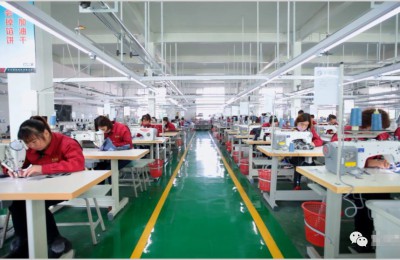

This year’s May Day holiday has swept all industries, and our textile printing and dyeing is no exception. It is very common to have 2-3 days off. However, after the short holiday, the printing and dyeing factories did not experience the crowded queues that often occurred after holidays in the past. In addition, although the printing and dyeing start-up rate rebounded quickly after the holiday, the height of the rebound was not as high as before the holiday. All signs indicate that the peak season is not complete this year, but the off-season has quietly arrived.
According to a trader, after the holiday It has been obvious that orders from dyeing factories have dropped a lot. In April, people still had to wait in line for more than a week, but after May Day, this situation is now rare. The reduction in orders from printing and dyeing factories not only reduces the number of queues for pressing cards, but also eliminates the early use of “expedited” and “expedited” methods to increase dyeing fees. Not only that, every time the dyeing factory raises the dyeing fee, the dye price that must be mentioned is also fluctuating and correcting.
Dye has entered the bottleneck period, and the price has gradually adjusted back
As for when the price of dyes was at its lowest, there is no doubt that it must have been during the epidemic last year. Taking the reactive dye black WNN as an example, the price has continued to decline since March last year, from an average price of 22,000-23,000 yuan/ton to an average price of 18,000-18,500 yuan/ton in July. In February this year, the printing and dyeing market Because a large number of orders were rushed to be shipped before the year, the overall market situation was better, and dye prices also took the opportunity to rise. The market price of reactive black WNN has reached 21,000 yuan/ton. This rising trend became even crazier after the year. In early March, the price of dispersed black ECT 300% was 30,000 yuan/ton, and the price of active black WNN was 23,500 yuan/ton, an increase of 1,000 yuan/ton from the previous week.
However, the recent growth in printing and dyeing seems to have been completely overdrawn, and prices have shown a correction trend. As of April 15, the market transaction price of reactive black WNN has dropped to 21,000-22,000 yuan/ton. Some dyes have returned to their prices a year ago, and some are even lower than last March. March to June every year is the peak demand season for reactive dyes, but this year the market did not show peak season conditions.
Many major dye manufacturers, in the first quarter All have experienced profit declines, with some declines exceeding 45%. Even due to poor market conditions, the operating rates of some major dye factories can only be maintained at about 60%. The weakening of the dye market is mainly due to the fact that orders from printing and dyeing companies are less than expected, resulting in dye consumption not reaching expectations. In this case, dye prices lack motivation to increase and begin to gradually pull back. Will the falling dye prices affect dyeing fees?
Dyeing costs are strong in the short term and may be negotiable in the later period
Since the beginning of the new year, the printing and dyeing market has basically seen two increases in dyeing fees. The first wave is the clear official announcement of price increases for most dyeing fees. The range is generally conservative, ranging from 0.02-0.2/meter. The second wave is due to the congestion in printing and dyeing factories after the New Year. In order to meet the shipment needs of some customers, “expedited” and “expedited” additional charges appeared. Generally, the range is relatively large, ranging from 0.1-0.4 yuan/meter.
The market is weakening, and the first thing to waver is There are extra charges for “urgent”, but the official price increases generally announced by dyeing factories are difficult to shake. Even during the epidemic last year, few dyeing factories in the market took the initiative to reduce dyeing fees. At most, they would give certain discounts based on the size of the order. . Moreover, there are still a large number of “market orders” in printing and dyeing factories recently, and printing and dyeing factories have not yet fallen into the tragic situation of last year’s epidemic.
According to a trader, although the printing and dyeing market has declined after May Day, there are still some factories that are crowded with production. The factory they are working on has too many market orders and has little enthusiasm for ordinary customers. The factory stipulates that orders of less than 5,000 meters must be issued after four days. As for the number of days after the card is issued, it depends on the situation of the workshop.
Although the recent printing and dyeing market is weakening, However, compared with last year, there are still many bright spots, and dyeing fees have just generally increased in March. The possibility of dyeing fee reductions in the off-season is obviously not too great. However, as overseas epidemics continue to break out and foreign trade orders are sluggish, the sustainability of domestic trade “market orders” is ultimately limited. The off-season may deepen further and may even reach last year’s lows. At the same time, dye prices have begun to shrink recently, and dye prices have begun to shrink. The fee will become negotiable, especially when the order has a certain amount.
</p