
Fabric News
Fabric News
New method for detecting oil spots on knitted fabrics
Oil spots, regardless of color, can only be discovered after dyeing or direct production and processing into knitwear. Could knitters and finishers be able to detect these oil spot…

A brief analysis of the phenomenon of “warp hanging” defects during dyeing and finishing of worsted wool fabrics
Abstract: The “warp hanging” defects of worsted wool fabrics are divided into three categories: single continuous piece hanging warp, single scattered warp hanging, and…
Special yarn characteristics, specifications and styles (2)
6. Highly simulated wool curly yarn Made of different super-bright polymers and processed into bundles through special composite spinning The new synthetic fiber material has an el…


Issues that should be paid attention to in low-temperature dyeing of wool
Commonly used dyes for wool dyeing include acid dyes (including strong acid dyes and weak acid dyes), acid mordant dyes, 1:2 metal complex dyes, reactive dyes for wool, Lanna free …
New trends in dyeing woolen products—cotton wool
Cotton-wool blended products have huge market prospects because of their unique style. Wool’s excellent elasticity and low thermal conductivity compensate for cotton’s …
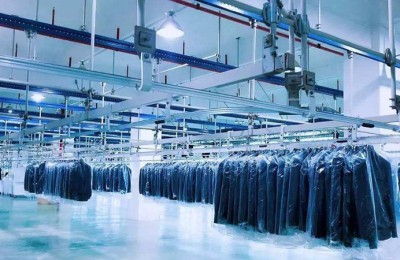
Nano functional coating finishing
In order to obtain new properties of fabrics, chemical functional coatings are usually applied to the fabric surface. Organic-inorganic nano-hybrid polymer materials are used to co…
Special yarn characteristics, specifications and styles (3)
22. Environmentally friendly flame retardant fiber Environmentally friendly flame retardant fiber is made by adding a phosphorus-based environmentally friendly flame retardant duri…

广告
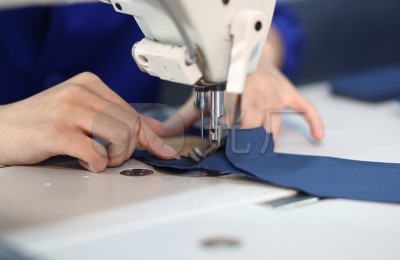
A brief analysis of the phenomenon of “warp hanging” defects during dyeing and finishing of worsted wool fabrics
Abstract: The “drop warp” defects of worsted wool fabrics are divided into three categories: single continuous piece hanging warp, single scattered warp hanging, and do…

Basic knowledge and application methods of transfer printing technology
Printing pigments or dyes on paper, rubber or other carriers, and then pad printing onto the product to be printed is called transfer Printing, but in a narrow sense, transfer prin…
Twelve new technologies in the printing and dyeing industry
1. Waterless dyeing technology is being perfected The main advantages are waterless, no additives, no need for drying, short dyeing time, and no need for post-processing. 2. Color …