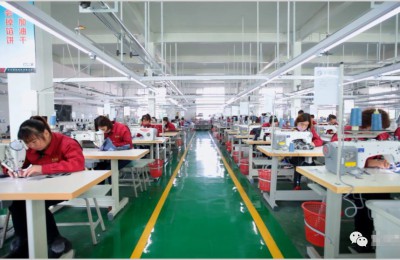

“Kechuangban Daily” reported on November 17 (Researcher Tian Xiao) When talking about industries with high pollution and high energy consumption, the public will generally think of heavy industries such as chemical steel and steel. What is less well known is that we have a large carbon emitter – clothing.
According to data from the United Nations Environment Program, the carbon emissions of the textile and clothing industry account for 10% of total global carbon emissions, which is higher than the carbon emissions of all flights and shipping combined. Forecasts show that when the world’s population grows to 8.5 billion in 2030, the clothing and textile industry’s carbon emissions may surpass the petroleum industry and become the largest source of carbon emissions; by 2050, the fashion industry will consume more than 30% of the global carbon budget. Therefore, the green and low-carbon transformation of the textile and apparel industry is urgent, and “carbon-neutral” clothing will become mainstream in the future.
“ESG Weekly” teamed up with Jingfu to conduct a survey on the ESG reports and annual reports of several clothing brands including PEACEBIRD, ANTA, H&M, and UNIQLO, and revealed the current progress of carbon neutrality in the clothing industry.
KPI disclosure is insufficient, and awareness of carbon reduction in the apparel industry needs to be improved
Data shows that every ton of textiles produced will emit 17 tons of greenhouse gases. In the key area of emission reduction, major clothing brands have come up with unique strategies.
In the ESG report, H&M has the most detailed disclosure on reducing carbon emissions. It reports that H&M currently has a drop in the number of supplier factories using on-site coal-fired boilers to 701 (down from 91 in 2021) and is working closely with supplier partners and local stakeholders in producing countries to accelerate Complete replacement of coal and financial support for suppliers to transition to solar photovoltaics, solar thermal and agricultural waste thermal energy.
At the same time, H&M also uses digitalization to track and calculate carbon emission data, uses a permanent 1 carbon dioxide removal amount, and gradually phase out unenvironmentally friendly coal-burning and replaces it with cleaner renewable energy.
ANTA has conducted a carbon inventory of the supply chain based on the requirements of Scope 3, and formulated different carbon reduction plans for different factories, buildings, and logistics centers; Peacebird stated in its annual report that it uses outsourcing to reduce carbon emissions in all aspects of the company’s production and operations. emissions, but no further disclosure was made on the carbon reduction targets and specific forms.
In terms of energy upgrades, Anta stated that it regularly maintains and manages old, high-energy-consuming equipment and promotes the use of clean, renewable energy; H&M went one step further and signed Sweden’s largest solar purchase agreement PPA to increase available renewable energy. The amount of electricity.
Currently, only H&M and Uniqlo among the companies surveyed have made detailed KPI disclosures on climate goals. H&M disclosed in its ESG report that its entire group’s climate goal is to reduce absolute emissions of scope 1 and scope 2 greenhouse gases by 56% by 2030, based on 2019, and absolute emissions of scope 3 greenhouse gases. 56% reduction. The long-term goals are to achieve net zero emissions by 2040; by 2030, store electricity intensity is reduced by 25% compared with the 2016 baseline; by 2030, the electricity in the supply chain is 100% renewable; by 2030, in operations Use 100% renewable electricity. Uniqlo and its parent company Fast Retailing Group have set sustainable development goals by 2030. Specifically: in the company’s global stores and offices, it plans to reduce greenhouse gas emissions by 90% by 2030 compared with 2019; at the supply chain end , plans to reduce greenhouse gas emissions by 20% in 2030 compared with 2019; on the product side, it plans to replace approximately 50% of all clothing fabrics with environmentally friendly recycled fabrics by 2030.
It can be seen that overseas clothing brands such as H&M and Uniqlo attach greater importance to the disclosure of carbon reduction targets, while domestic brands have greater room for improvement.
Who works the hardest to reduce emissions and waste?
The textile industry is a highly polluting industry. Whether it is the discharge of wastewater containing chemical substances or the improper operation method of burning and landfilling when disposing of old clothes, enterprises need to make further green adjustment plans. In this regard, the surveyed companies have shown considerable importance.
First of all, water conservation, utilization and treatment have always been a major difficulty in the textile industry. Garment companies in the production process should take measures to effectively conserve water resources and protect fresh water resources. Anta’s ESG report disclosed that it saves and utilizes water resources by improving old equipment and recycling steam pipeline return water; H&M adopts inclusive and scalable water resources management actions at the basin level.
In both production and recycling processes, companies need to pay attention to the circulation of water resources and not discharge water pollution at will. In this regard, Anta mainly controls waste discharge through the use of chemical treatment methods and equipment and machines; H&M uses the power of third parties to jointly improve and create a sewage treatment plant ETP, aiming to control wastewater discharge to meet basic requirements.
Secondly, in terms of product recycling, UNIQLO launched the RE.UNIQLO project activity in 2020. The first phase result is a recycled down jacket. UNIQLO down products are recycled in some regional markets and re-produced into brand new products. In addition, recycling obligations can also be diverted to reuse clothing and other items such as solid fuel RPF and sound insulation materials for cars.
H&M announced that it plans to increase the proportion of recycled materials or materials from other more sustainable sources to 84%, of which recycled materials account for 23%. As a materialAs part of the roadmap, H&M is introducing regenerative farming practices, including having regenerated cotton on order for 2023.
In terms of recycled products, Anta focused on sustainable packaging, saying that it will use recycled recycled materials, recyclable or FSC-certified paper packaging, reduce the use of virgin plastic packaging, and continuously improve the sustainable proportion of product packaging.
Judging from the above measures, it is clear that clothing companies attach great importance to emission reduction and waste reduction, but the scope of attention of major companies is different. As the carbon neutrality goal continues to move forward, the efforts made by the textile and apparel industry are far from enough. The industry still has a long way to go before consumers can wear truly “carbon neutral” clothing.
</p