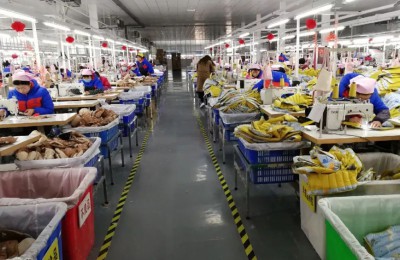
Turkey is one of the world’s largest textile exporters. However, since this year, the export volume of the textile industry has dropped significantly, and the capacity utilization rate has dropped by at least 30%. Some small-scale yarn manufacturers have even stopped production completely. Why is Türkiye’s textile industry facing a “cold winter”? What impact will the textile industry recession have on the Turkish economy? Chen Huihui, a reporter from China Central Radio and Television in Turkey, recently visited the Istanbul Textile Industrial Zone to see her visit.
Headquarters reporter Chen Huihui: 70% of Turkey’s ready-made garments and clothing products are mainly sold to the EU and the UK. Many of the well-known European brands’ raw material supply and processing services come from Turkey. However, data shows that in the first six months of this year, Turkey’s exports of textiles and raw materials to the EU fell by 22.5% compared with the same period last year.
Sharaf Fayat, Chairman of the Turkish Chamber of Commerce and Commodity Exchanges Union Readymade Garment and Apparel Industry Congress: The primary problem is the reduction in demand in the main market, the European Union. Due to the economic recession in the European Union and the United States, total world trade in garments and textiles decreased by approximately 15%.
In addition, rising costs have also reduced the international competitiveness of the Turkish textile industry. In recent years, Turkish inflation has been high, energy prices have remained high, and labor costs have continued to rise. At present, when European consumers buy a T-shirt made in Turkey, the price is about 40% higher than that produced in countries such as Bangladesh and Vietnam, whereas a few years ago the gap was only between 15% and 20%.
Headquarters reporter Chen Huihui: Data show that due to multiple factors such as shrinking demand in major markets such as the EU, the current capacity utilization rate of Turkey’s entire textile industry has dropped by at least 30%, and the capacity utilization rate of some yarn manufacturers has even dropped by 50%.
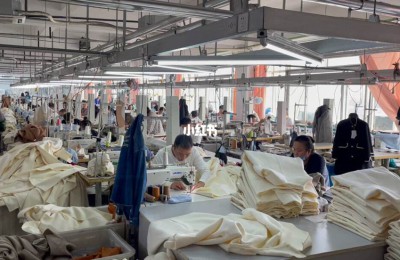
The production workshop is empty, with five or six workers completing the few orders. This manufacturer of lining fabrics for jeans has deeply felt the chill of the industry this year.
Istanbul textile producer Mohammad Arslan: From last year to this year, our production dropped by 30% to 40% due to a sharp drop in orders. Some companies are slowly closing down, and some companies that have reduced production are considering layoffs.
In 2022, Turkey’s textile exports will reach US$10.4 billion, equivalent to approximately RMB 75 billion. The export volume of ready-made garments reached US$21.2 billion, equivalent to approximately RMB 150 billion, ranking fifth and sixth in the world respectively. Industry insiders pointed out that as one of Turkey’s pillar industries, the rise and fall of the textile industry will have an impact on the overall economy.
Hayati Akbaba, Chairman of the Garment and Textile Industrialists Association in Ankara, Turkey: The textile industry has always been the locomotive of the Turkish economy. We must try our best to improve the current predicament, otherwise it will seriously damage the Turkish economy and employment. Data shows that the current economic loss has reached about 10%.
Akbaba believes that judging from the current situation, the cold winter of the textile industry will continue in the first half of next year. However, if the government can take effective measures to encourage exports, curb inflation, and boost the economy, it is expected that the Turkish textile industry is expected to grow as early as the second half of next year. Usher in recovery. (Source: CCTV News Client)
</p
Will the cold winter in the textile industry continue in the first half of next year? Exports from one of the world’s largest textile exporters have dropped sharply, and yarn mills have stopped production. . .

Turkey is one of the world’s largest textile exporters. However, since this year, the export volume of the textile industry has dropped significantly, and the capacity utiliz…
This article is from the Internet, does not represent 【www.buyfabric.net】 position, reproduced please specify the source.https://www.buyfabric.net/archives/30094