
Polyester manufacturers did not disappoint this week either, with price reduction promotions coming as promised again.
Another factory in Hangzhou lowered the price of polyester DTY by 150 yuan
A FDY factory in Shaoxing today The price of polyester yarn has been reduced by 200-300 yuan
The price of polyester yarn from another large factory in Tongxiang has been reduced by 200-400 yuan
A major factory in Tongxiang lowered the price of polyester yarn by 300 yuan today
…
The frequency of weekly Monday promotions is very stable. The price reduction this week is not much different from the previous ones, and the promotion time is also consistent with the previous period, basically appearing on Thursdays and Fridays. But will the downstream market continue to buy as much as it did in the early days when raw materials fell?
Promotion has become the norm, and it is difficult for downstream users to buy it
The price of raw materials has risen sharply after the Spring Festival, which may be the best time for polyester raw material factories this year. At that time, it was common for raw materials to be sealed and not sold, or to be priced at the same price every day or half a day. Even with various price increases, the doors of polyester manufacturers were still lined with trucks waiting to be loaded. But I don’t know since when, the rising trend of raw material prices has stopped, and sales need to be guaranteed through price reduction promotions, but this road has become increasingly difficult to follow.
From April to now, polyester raw materials have experienced 6 price reduction promotions, but the effect of the promotion is still Gradually weaken. It can be seen from the average polyester production and sales trend chart that in the three promotions in April, the production and sales were 540%, 380%, and 510% respectively, while the production and sales in May have dropped to 237%, 290%, and 340%, which are the same as in April. Production and sales are not at the same quantitative level at all. Not only is the differentiation between production and sales obvious during production and sales, but also there is a huge difference between production and sales during normal times after promotions. When there was no price reduction promotion in April, production and sales were basically around 40% to 50%. However, after May, production and sales have basically dropped to 20% to 30%, which is basically only half of April.
In other words, with the increasing frequency of promotions, the downstream market has become increasingly reluctant to purchase raw materials, not only on the day of promotion, but also indifferent to low prices. , even more so at ordinary times. According to a person in charge of a weaving company, they have never purchased or hoarded raw materials during several price reduction promotions by raw material factories because there is less demand for orders. It doesn’t matter whether the price of raw materials will rise or fall later. They always follow their own pace. Come.
Weaving starts have dropped in the off-season, and the demand for raw materials has decreased
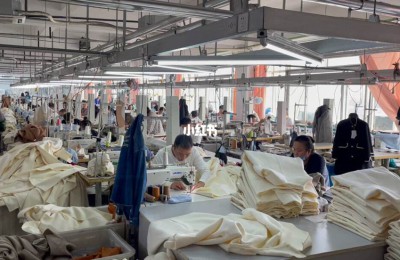
Enter promotions at upstream polyester raw material factories When the quantity is guaranteed, the weaving operation rate in the downstream Jiangsu and Zhejiang regions also ended the rapid rise after the Spring Festival and began to usher in a correction. Especially after entering May, the peak season ends and the off-season arrives, and orders in the downstream market further decrease. There is no surprise this week, and the weaving operating rates in various places are still mainly falling.
According to a textile foreign trader, the orders they are making now are all placed in March and April. Some of the orders were shipped before May Day. Hundreds of rolls have been shipped every day these days. Basically, there will be no decent orders on hand by the end of the month. By June, it is estimated that only small orders such as proofing and staking will be left.
The weaving operation rate has not only been decreasing since April. As the weather gets hotter and environmental protection and production restrictions increase, the operation rate will further decrease in the off-season. Weaving manufacturers that are gradually declining will inevitably have a simultaneous decrease in demand for various raw materials.
Crude oil prices have plummeted, and the opportunity is ripe for raw material price cuts
On May 20, Iranian President Lu Hani said that the main parts of the Iran nuclear deal have been agreed upon. The West has agreed to lift major sanctions on Iran, such as oil, petrochemicals, shipping, insurance and the central bank. There are just a few details that need to be ironed out before a final agreement can be reached. Iran also said it would soon export oil from a new port that would allow it to bypass the Strait of Hormuz. Iran’s National Oil Co said it will start shipping crude oil from terminals in the Gulf of Oman next month, bypassing the Strait of Hormuz.
The prospects for talks between the United States and Iran are optimistic, and there are concerns that crude oil supply may increase. In addition, the worsening epidemic situation in some Asian countries has triggered concerns about demand, and international oil prices have fallen for three consecutive days.
Except for promotions, the price of raw materials has been relatively stable. However, the price of crude oil has plummeted, and upstream costs have increased significantly. If it decreases, the inevitable result will be a rapid increase in profits. The profits of polyester yarn have also been at a high level in recent times. The profits of POY are over 700 yuan/ton, and the profits of FDY and DTY are also about 400 yuan/ton. The downstream weaving market is struggling with no orders and no profits. The upstream raw materials should make appropriate profit concessions and proactive price reductions can revitalize the industrial chain.
Raw materials Promotions will continue to exist until polyester manufacturers clearly cut prices. Although sales are declining again and again, they are still feasible as a way to clear inventory. But with the upstream crude oil prices falling and the terminal market weakening, how long can this price reduction promotion play last?
<br